
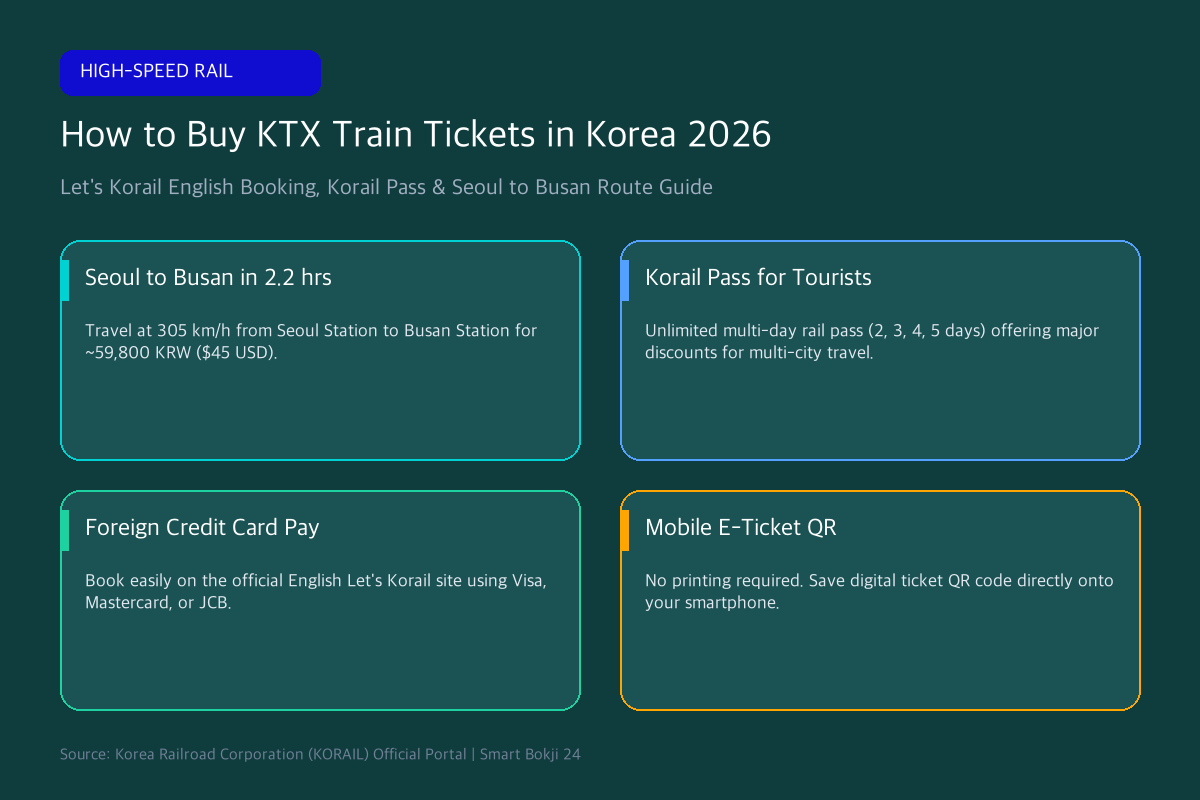
Planning intercity travel across South Korea? This complete guide on how to buy KTX train tickets in Korea for foreigners covers online Let’s Korail booking, Korail Pass unlimited discounts, and high-speed routes from Seoul to Busan.
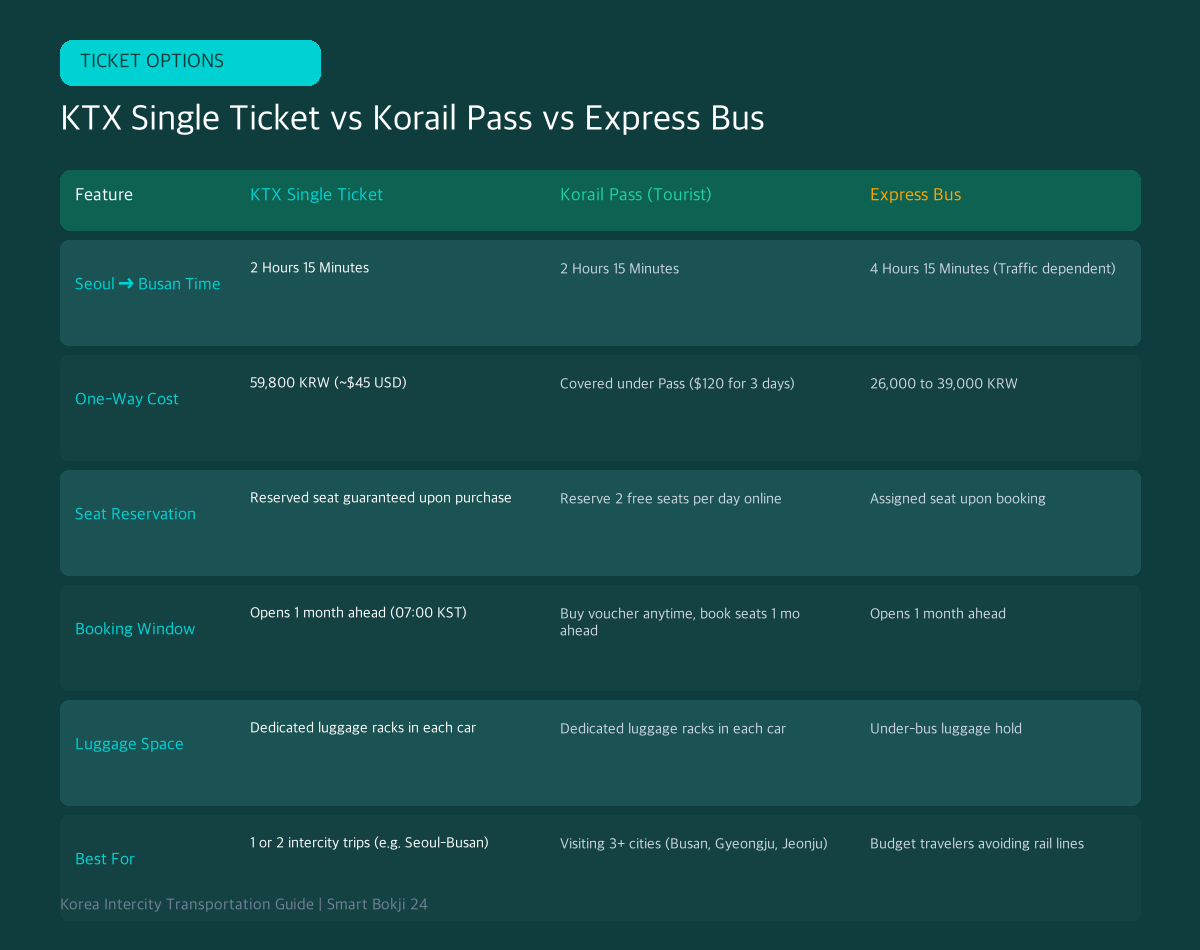
1. How to Buy KTX Train Tickets in Korea for Foreigners: Single Tickets vs Korail Pass
International travelers can choose between single point-to-point tickets or the multi-day Korail Rail Pass:
🚅 Popular KTX Routes & Average Travel Times from Seoul Station
- Seoul ➔ Busan: 2 Hours 15 Minutes (~59,800 KRW / $45 USD)
- Seoul ➔ Gyeongju: 2 Hours (~49,300 KRW / $37 USD)
- Seoul (Yongsan) ➔ Jeonju: 1 Hour 35 Minutes (~34,600 KRW / $26 USD)
- Seoul ➔ Gangneung (East Coast): 1 Hour 50 Minutes (~27,600 KRW / $21 USD)
- Official Source: Ministry of Land, Infrastructure and Transport.
2. What is the Korail Pass for Foreigners?
The Korail Pass is an exclusive rail pass available only to non-Korean passport holders. It grants unlimited rides on almost all Korail trains (KTX, KTX-Sancheon, ITX-Cheongchun, ITX-Saemaeul, and Mugunghwa) for a designated duration (Consecutive 3-Day/5-Day passes or Flexible Select 2-Day/4-Day passes).
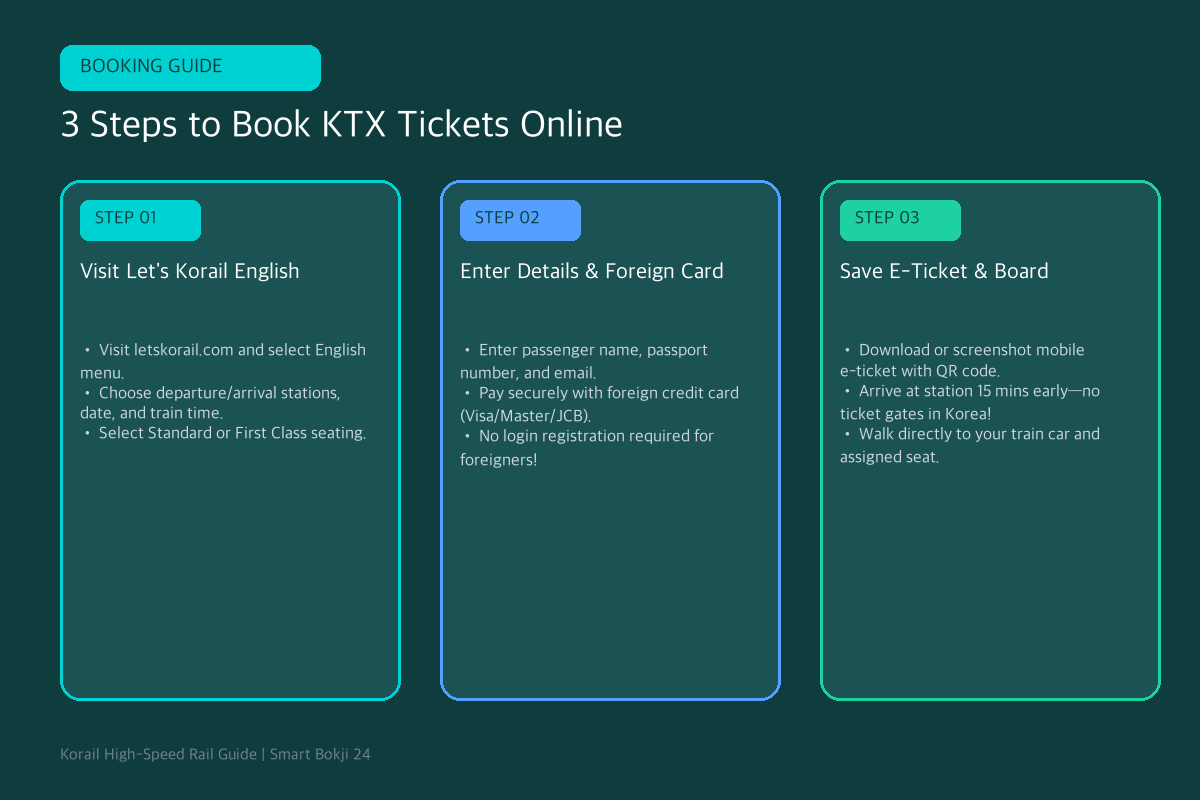
3. Step-by-Step Online Booking on Let’s Korail
- Step 1: Access Let’s Korail English: Visit the official booking portal at www.letskorail.com and click on the English menu at the top. (Tickets open exactly 1 month prior to departure at 07:00 AM KST).
- Step 2: Select Train & Enter Passenger Info: Choose departure and arrival stations, travel date, and preferred train time. Enter your full passport name, nationality, and email address. Pay securely using foreign Visa, Mastercard, or JCB credit cards.
- Step 3: Save E-Ticket & Board Directly: Save the digital ticket confirmation or QR code on your smartphone. There are no ticket turnstile gates at Korean train stations! Simply check the departure display board for your platform track, walk directly to your train car, and sit in your reserved seat.
4. Frequently Asked Questions (FAQ)
Q1: What is the difference between KTX and SRT trains?
KTX operates from Seoul Station and Yongsan Station, while SRT (Super Rapid Train) departs from Suseo Station in southeastern Seoul (Gangnam). Both travel at 305 km/h on the same high-speed tracks.
Q2: Can I store large luggage on the KTX?
Yes. Every KTX train car features dedicated luggage storage racks in the entryway vestibules for large 28-inch+ suitcases, as well as overhead racks inside the passenger cabin.
🔗 Recommended Travel & Transit Guides
- Get the unlimited Seoul transit card: Read our Korea Climate Card vs T-Money Transit Guide 2026.
- Top Korean navigation tools: Check the Best Korea Navigation Apps for Tourists 2026.
- Official Source: Ministry of Land, Infrastructure and Transport.
Choose the ticket type before searching trains
A point-to-point KTX ticket is often simpler for one or two journeys, while a rail pass only makes sense after comparing the pass price with the exact trains you plan to take. A pass does not guarantee a seat: reserve each train separately, especially on Friday evenings, Sundays, and public-holiday periods.
Booking details that prevent mistakes
Search with the station name, not only the city name. Seoul-area departures may use Seoul, Yongsan, Cheongnyangni, or Suseo, and SRT is a separate operator from Korail. Confirm the operator, station, departure date, passenger name, and refund deadline before payment. Buy through Korail or an authorized channel and keep the booking number available offline.